Simacan product updates

Curious about what’s new or what the future holds? We’d love to walk you through our latest product developments!

Updates June 2026

Truck tolling: from insight to action
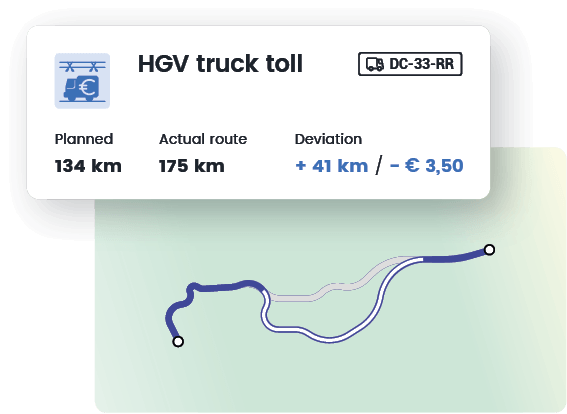
With the introduction of truck tolling in the Netherlands, the landscape for transport organisations is changing. Costs increasingly depend on vehicle type, route and emission class. To help customers prepare for this change, we have developed an initial version of a truck tolling dashboard.
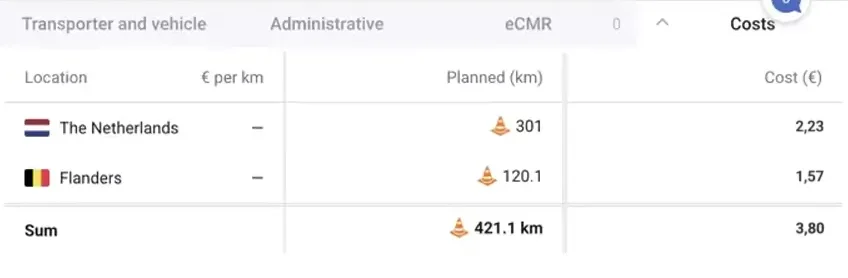
The dashboard provides insight into the impact of toll charges at trip level. By combining vehicle data, route information and regulations, organisations gain an increasingly accurate view of the actual cost per kilometre. This helps them anticipate changes and adapt their operations accordingly.
Over the coming period, the focus is on integrating these insights into daily processes. This includes supporting financial processes such as claims handling and cost allocation, so that the functionality becomes an operational tool rather than just a reporting instrument.

CO₂ and cost insights at operational level

Transport organisations increasingly need control over both costs and sustainability. While CO₂ emissions were once mainly a reporting topic, they are now becoming part of day-to-day decision-making. That is why we continue to evolve our solutions from high-level insights towards operational intelligence that supports action.
We combine vehicle data, route information and available market data to provide insight into fuel consumption and emissions. We work with different levels of data quality, ranging from initial estimates to increasingly accurate calculations based on real-time data.
An important development is the ability to translate these insights down to individual trips and even individual consignments. This allows organisations not only to report on costs and CO₂ emissions, but also to actively manage them within daily operations.

Further refinement of the TD Matrix

We continue to enhance our existing and highly accurate travel time predictions with several important improvements. In addition to historical data, seasonal influences and regional differences, we now incorporate more real-time and operational factors that directly affect trip execution.
For example, road closures and diversions are increasingly reflected in our calculations, including the impact of temporary situations such as roadworks and incidents. We are also integrating emission zones into our routing logic, ensuring that routes are not only efficient but also compliant with local regulations.
Another key improvement focuses on the accuracy of route start and end points. By aligning calculations more closely with real-world locations such as distribution centres, predicted travel times better reflect operational reality.
Finally, we are developing new scalable algorithms that allow us to perform these calculations faster and at greater scale. This makes it possible to optimise complex planning scenarios involving thousands of locations without compromising accuracy.
These developments make planning not only more predictable, but also more resilient in daily operations.

Introducing Simacan Transport Planner

We are developing a new transport planning solution: Simacan Transport Planner. It is the next step towards a more connected approach to transport orchestration.
While traditional transport management systems (TMS) often focus on administrative planning, Simacan focuses on connecting planning, real-time operations and execution. With this development, Simacan expands into the phase before departure: planning itself.
Simacan Transport Planner builds on the same mapping, traffic and operational data already available within the Simacan platform. This creates one central environment where planners can build trips, assign vehicles and organise open transport orders, directly connected to live operations.
Simacan Transport Planner is currently under development and continues to evolve step by step. The first version focuses on creating and managing trips, with real-time insight into vehicles, availability and operational context.
The goal is simple: bring planning and operations closer together so that plans do not only work in theory, but also in practice.
Future phases will add functionality for real-time steering, chauffeur communication and operational transport coordination.
With this expansion, Simacan brings planning and real-time execution together within one operational platform.

New platform role: the Lead for transport orchestration and multi-carrier coordination

We have expanded the Simacan platform with support for a new role: the Lead.
This role is designed for organisations that coordinate transport processes across multiple carriers, charters and logistics partners. Examples include logistics service providers, control towers, Lead Logistics Providers (LLPs) and other organisations responsible for coordinating complex multi-carrier operations.
The Lead organises, monitors and manages the transport process on behalf of a shipper, retailer or other coordinating organisation. The Lead does not need to perform transportation activities itself. In some operations the same organisation may also act as a carrier, but this is not required. The independent coordination role is what matters.
This addition reflects the reality of modern logistics, where transport is increasingly managed from a central coordination layer spanning multiple carriers and networks. Within the platform, the Lead gains complete operational visibility and control, including collaboration with charters and other logistics partners.
The new Lead role provides one overarching operational view across all trips, hubs and carriers. The Lead can identify deviations, monitor trips and direct the appropriate party immediately, while ensuring that carriers do not gain access to each other’s commercial or operational information.
This explicitly supports a central coordination function within complex multi-carrier networks.
Communication has been designed accordingly. The Lead communicates directly with the relevant parties in the transport process without exposing confidential information to other stakeholders. Thanks to role-based access and controlled data sharing, collaboration remains efficient, scalable and manageable, even within complex logistics ecosystems.
With the introduction of the Lead role, Simacan now supports not only shippers and carriers, but also organisations operating as central transport coordinators within multi-carrier, control tower, LLP and 4PL environments.
This further strengthens Simacan’s position as a platform for transport orchestration and cross-organisational supply chain collaboration.
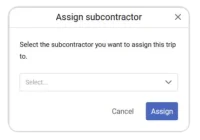
Assign subcontractor

Updates December 2025

Since our last update in August, we haven’t stood still. We’ve implemented smart improvements to make your daily operations easier, faster, and more transparent. From automatically adjusted breaks to more accurate arrival times and real-time rerouting, these are the latest updates in our transport execution platform: the Simacan Control Tower, also known as the execution TMS for your logistics operation.

Smart seasonal planning? Simacan has you covered

Simacan provides highly accurate travel time predictions by analyzing historical traffic data, vehicle profiles, road characteristics, time of day, and seasonal patterns. Whether it’s a congested Friday or a quiet Tuesday or public holiday, you’ll know exactly what to expect.

All seasonal influences have already been factored in, from national holidays and school vacations to known traffic peaks. We even consider regional differences. If the northern region’s holiday starts earlier than the south, Simacan reflects that in your planning, based on your trip’s origin or destination. This allows you to easily respond to unusual traffic patterns and keep your transport right on schedule. Whether it’s spring break, autumn holiday, or an ordinary Thursday: you know what to expect, and so does your planning.

Greater control over breaks in trip planning changes
Smart break relocation in the Simacan Control Tower: if you cancel a stop (a loading or unloading location), any planned break will automatically move to the next stop. Already have a break there? It will be neatly combined. Cancel the final stop? Then the break is removed. Restore that stop later? The break will be reinstated. Handy, right?
Note: if you manually move a stop, the break will not move with it. In that case, you’ll need to adjust the break separately. This ensures you stay in full control of your planning. This way, your trip planning stays logical, up-to-date, and aligned with real-world events, without surprises on the road.
Enhanced user experience in trip overview and menu

Enhanced user experience in trip overview and menu

We are continuously improving the trip overview and menu in the Simacan Control Tower. These changes help you assess trips faster and prioritize more easily. Small but clever enhancements make it easier to spot exceptions, organize trips, and take quicker action.
User experience has also been a focus: the trip overview is more responsive, frequently used functions like snoozing are more accessible, and navigation feels more intuitive. Altogether, these updates create a smoother workflow and a more enjoyable, efficient user experience.

More accurate insight into arrival and departure times
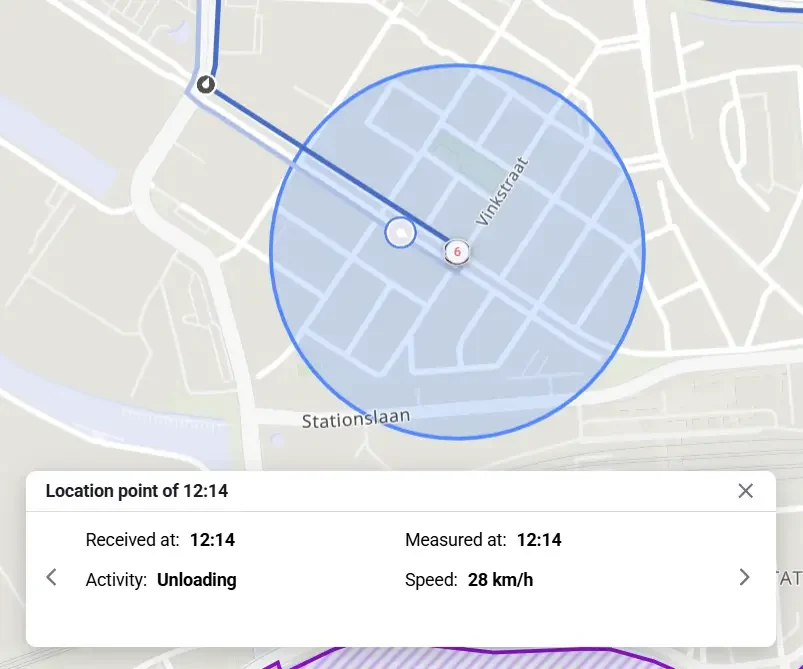
We are developing a smarter way to register arrival and departure times at stops. Currently, these timestamps are automatically determined based on geofencing, the moment a vehicle enters or exits a virtual zone. However, the accuracy depends on how frequently the vehicle sends its location (GPS frequency), which can result in discrepancies of several minutes.
That’s why we’ve developed a new method: the first GPS point inside the geofence will soon be registered as the arrival time, and the first point outside as the departure time. This method has already been technically implemented and will soon be gradually rolled out to customers without home delivery operations.
In addition, we are exploring ways to further clarify the accuracy of these timestamps. By analyzing the GPS point just before arrival or departure, we gain insight into the potential margin of error. This approach will lead to more transparent and reliable stop registrations.
accurate insight into arrival and departure times

Master Data updates

Heatmap now shows transport activity even more accurately

Some Simacan users are already familiar with the ‘Master Data’ functionality, but what you may not know is that it now works even faster and more accurately, especially at larger locations, this is a game-changer.

Simacan Master Data contains information about locations, such as address, preferred access/exit routes (first and last mile), and loading/unloading capacity. For users with access to Master Data’s ‘Locations’, the heatmap on the map has been improved. It shows where vehicles frequently stop. The more traffic, the “hotter” the location, ranging from blue to red. This quickly reveals busy or quiet locations, helping to optimize routes and planning. You always have an up-to-date, reliable view of transport activity at your locations.
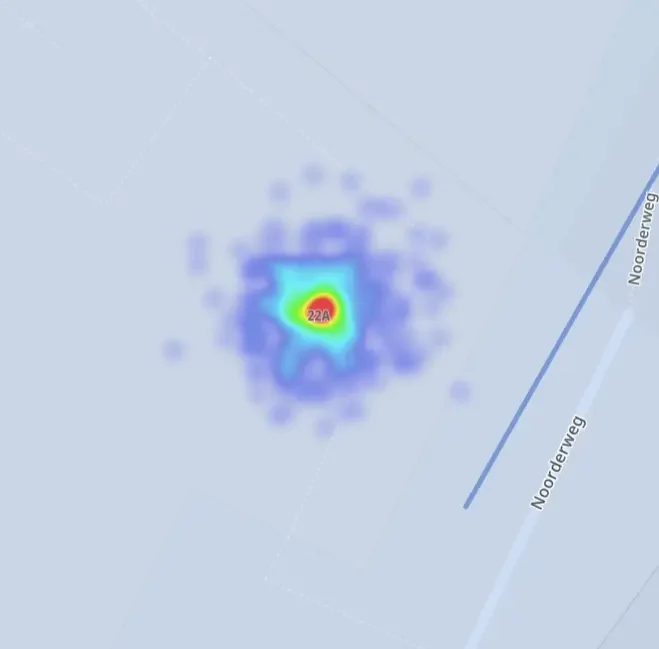
Heatmap now shows transport activity even more accurately

User rights in Master Data more transparent

Sharing data with supply chain partners is essential, but it should be on your terms: safe, controlled, and tailored to who needs what. That’s why we’ve updated the user rights in Simacan Master Data. You can now set with a single click whether a user has access to all or only specific locations. You’ll also immediately see which locations someone is allowed to view. No more generic rights, but access based on role, function, and context. It’s not just convenient, but also aligns with the requirements of the European cybersecurity directive, NIS2.

Updates August 2025

Easier organisation recognition for better collaboration in the Control Tower

In veel transportoperaties werken meerdere partijen samen, zoals leveranciers en vervoerders. Tot nu toe was het vaak lastig om overzicht te houden: wie doet precies wat? Zeker als één organisatie meerdere rollen vervult, zoals vervoerder, subcontractor én verzender, of als je op specifieke locaties moet kunnen filteren, kan dat tot verwarring leiden.
Daarom hebben we dit proces vereenvoudigd. Vanaf nu herkent de Simacan Control Tower elke partij op basis van de organisatienaam, dus niet meer op basis van hun rol. Of een organisatie nu vervoerder is, verzender of allebei, je ziet direct wie het is. Dit maakt het makkelijker om ritten per locatie te bekijken en zorgt ervoor dat je met de juiste partij communiceert, zonder misverstanden.

This change improves communication clarity, strengthens collaboration between stakeholders across the supply chain, and prepares the platform for future capabilities, such as notifications per organisation, chat features, and targeted communication on exceptions, all within the correct context. Less confusion, more control.

Targeted chat with organisation tags in the Simacan Control Tower

With this new organisation-based recognition in the Simacan Control Tower, the chat functionality has also been enhanced. Previously, general tags such as “@carrier”, “@shipper” or “@subcontractor” were used. From now on, you can specifically tag the name of the organisation in your messages.

This makes communication much more concrete and personal. You know exactly who you’re addressing, and only organisations that are actually active on the platform can be tagged. If you leave out the tag ‘@’, the message is only visible to your own organisation. This makes it even easier to communicate clearly and purposefully with the right people during transport execution.

Simacan expands to Czech (CZ)

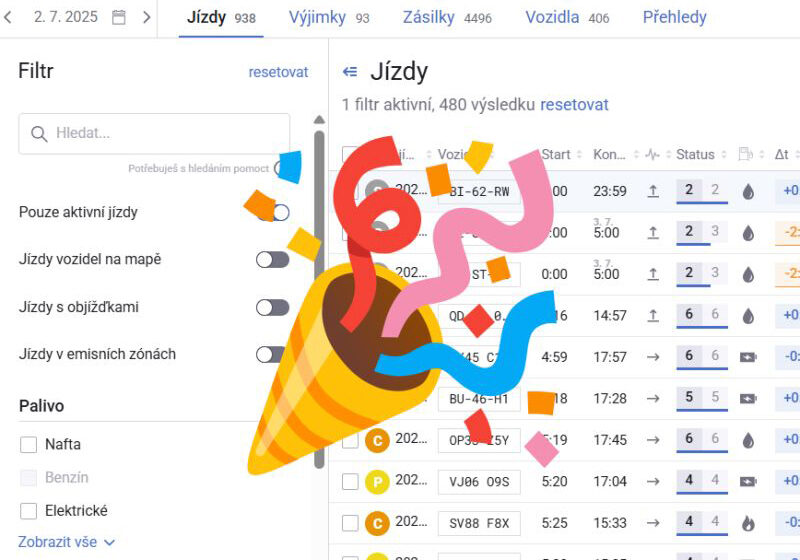
“Vítejte!” Our Simacan Control Tower and Track & Trace portal are now also available in Czech! With this addition, we expand the language options on our platform, which already includes Dutch, German, French, English, Danish, Polish, and Romanian. This enhancement makes it even easier for international users and partners to work in their native language within the Simacan platform. A significant step forward in our mission to simplify collaboration in transport chains even further!
More flexibility for home delivery operations: easily add stops to planned or ongoing trips

In home delivery operations, it’s common for trips to require adjustments. For example, sending a driver back to a previously visited address or adding an extra stop at the last minute. This can be useful when something needs to be picked up or returned to a customer. In such situations, it’s crucial to make changes quickly and without hassle.
To support this operational flexibility, Simacan has expanded its functionality for adding stop locations during already planned or ongoing trips. With the new “Add Stop” button, Simacan users can easily insert an additional stop or repeat a previous one without disrupting the existing planning. This way, you maintain full control over your delivery process, even when your driver is already on the road.

Broader support for accurate mileage registration

In most design strategies, we apply the principle of “less is more.” But when it comes to data, we prefer the opposite! At Simacan, we continuously seek additional data sources to enrich and validate existing data. That’s why we are currently expanding the determination of realized mileage with new data inputs.
In addition to our existing support for wheel rotation data (odometer data) via FMS systems like Trimble (connected to the tachograph), we are integrating with other telematics and mobile solutions. This includes expanding support for odometer data from other FMS providers. As part of this initiative, we are working on integration with Webfleet and including Transics, Geotab, and other systems in the development roadmap.
We are also addressing scenarios where an FMS does not provide a direct odometer interface. For these cases, we focus on mobile solutions that are OTM-compatible and capable of recording mileage, such as App2Track. This ensures that reliable mileage reporting remains possible.
In this way, we can offer broadly applicable, accurate, and robust mileage reporting—regardless of vehicle type or onboard equipment. This expansion enhances the reliability of monitoring, reporting, and analysis within the platform and strengthens data quality for all stakeholders in the transport process.

Updates March 2025

Experience the new map display in the Simacan Control Tower

The map in our Control Tower has received a major upgrade! Thanks to the latest WebGL technology, the map is now faster, smoother, and more detailed than ever before. This enhances navigation and provides greater visibility for your transport operations.

What's improved?
  • Smoother and deeper zooming for a detailed view of routes and locations.
  • Street names remain visible, without being obscured by traffic information.
  • Roadworks, closures, and diversions displayed directly on the map.
  • Emission zones clearly marked, helping you comply with environmental regulations or avoid restricted areas.
WebGL required

The updated map runs on WebGL, a standard feature in modern browsers. You can check if WebGL is supported on your device by visiting https://get.webgl.org/. If it is not supported, the Control Tower will automatically switch back to the previous map version, but you will miss out on the latest features.

Updates January 2025

Emission zones visible in the Control Tower

All emission zones (ZEZ and LEZ) currently enforced in the Netherlands are now displayed on the map in our Control Tower. Simacan users can instantly see the applicable emission classes (such as Euro standards) and access restrictions for each zone.

With our technology, these environmental zones are integrated into the map data. Vehicles will soon automatically follow permitted routes, avoiding restricted zones, whether the destination is inside or outside an environmental zone. Legislation evolves quickly, but our platform adapts seamlessly and stays up-to-date.

This functionality will soon be available for multiple European countries, further enhancing cross-border transport efficiency and compliance. Stay tuned for updates.

Snoozing exceptions: now even easier

With the improved ‘snooze’ functionality in the Simacan Control Tower, managing exceptions has never been easier. If you want to temporarily hide an exception, you can now remove it from view with a single click. Choose from preset snooze durations (30 minutes, 1 hour, 4 hours, or indefinitely) or set a custom end time.
As noted in the previous product update, collaborating organisations can now independently snooze exceptions, ensuring each team remains focused on the most urgent transport issues.

Towards accurate mileage tracking

We are evaluating how to calculate actual (measured) mileage as accurately as possible. This involves accounting for varying input from different Fleet Management Systems (FMS). A key focus is precise monitoring of stops, as the calculation of driven miles directly depends on this. Stay tuned for updates.

Pin important trips and always stay up-to-date

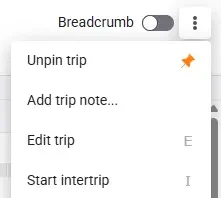
Simacan users can now ‘pin’ specific trips in their overviews ‘Trips’ and ‘Exceptions’. This feature is especially useful for trips you want to continuously monitor and quickly locate. Pinned trips are prominently displayed at the top of the trip overview, regardless of any applied filters or exceptions. This ensures a more efficient and time-saving workflow.

Automatic rerouting at road closures

We improve our platform by taking road closures into account. In the Control Tower, we display the (suggested) diversion route and calculate travel times. This enhances the estimated time of arrival (ETA) and provides insights into any route changes compared to the original plan.

Simacan users gain more insight into trips scheduled on roads affected by closures, enabling them to proactively address disruptions. The Control Tower’s trip details screen now shows both the original route (without closures) and the rerouted (proposed) route. The closures causing the detours are clearly highlighted. Additionally, users can see the impact of the reroute on travel time from location A to B.

Improvements are also implemented in the overviews ‘Trips’ and ‘Exceptions’: users can easily filter trips impacted by road closures. These are now marked as ‘Trips with detours.’ These enhancements provide users with greater control over their transport processes, allowing proactive responses to changes. This leads to more efficient planning and improved communication with customers.